
Bringing your spouse to live with you in the UAE requires meeting clear salary thresholds, providing an attested marriage certificate, and completing a multi-step application process. This comprehensive guide walks you through every requirement for 2026.
The UAE spouse visa is a family residence permit that allows a legal resident to sponsor their husband or wife for long-term residency. The visa is tied directly to the sponsor’s residency status, meaning the sponsored spouse’s legal presence in the country depends entirely on the sponsor’s valid visa. Once granted, the spouse receives a residence visa, Emirates ID, and the right to live in the UAE for the duration of the sponsor’s visa, typically one to three years. The sponsored spouse can open a personal bank account, apply for a UAE driving license, and access healthcare with mandatory insurance. However, the visa itself does not authorise employment; a separate work permit is required for paid employment.
This guide covers every aspect of the process like eligibility criteria, salary requirements across emirates, a complete document checklist with attestation steps, the step-by-step application process through GDRFA and ICP, cost breakdowns, health insurance mandates, special cases including female sponsors and Golden Visa holders, renewal procedures, and a summary checklist. All information is current for 2026.
Table of Contents
Eligibility Criteria and Salary Requirements 2026
Meeting the eligibility criteria is the first and most important step. The UAE has streamlined family sponsorship rules, removing the previous requirement for specific job titles and focusing instead on financial capability.
Core Eligibility for Sponsoring a Spouse
To sponsor a spouse for a residence visa in 2026, you must satisfy the following fundamental conditions established by Federal Decree-Law No. 29 of 2021 and Cabinet Resolution No. 65 of 2022:
- Valid UAE Residency: The sponsor must hold a valid UAE residence visa (employment, investor, or long-term residency) and possess a valid Emirates ID.
- Minimum Monthly Income: The sponsor must earn at least AED 4,000 per month, or AED 3,000 plus employer-provided accommodation. This threshold applies to sponsoring a spouse and children.
- Legal Marriage Proof: An attested marriage certificate, recognised by UAE authorities, is mandatory. The certificate must be translated into Arabic if issued in another language.
- Suitable Accommodation: The sponsor must provide a registered tenancy contract (Ejari in Dubai, Tawtheeq in Abu Dhabi) or proof of property ownership as evidence of adequate housing for the family.
- Health Insurance: Mandatory health insurance coverage for the sponsored spouse is required before visa stamping. The sponsoring spouse is legally responsible for this cost.
Salary Requirements by Emirate and Sponsor Type (2026)
While the federal baseline is AED 4,000 per month, individual emirates may apply slightly different thresholds depending on the sponsor’s category. The table below summarises the current requirements.
| Emirate / Sponsor Type | Minimum Monthly Salary (AED) | Special Notes |
|---|---|---|
| Dubai (GDRFA) | 4,000 (without housing) / 3,000 (with employer-provided housing) | Salary certificate and registered Ejari tenancy contract required |
| Abu Dhabi (ADHA) | 3,000 to 4,000 | Similar thresholds; exact figure confirmed at application stage |
| Northern Emirates (Sharjah, Ras Al Khaimah, Ajman, Umm Al Quwain) | 3,000 or more | Follow federal GDRFA guidelines; local office confirms specific threshold |
| Golden Visa Holder | No minimum salary requirement | Can sponsor spouse, children of all ages, and parents |
| Green Visa Holder | No minimum salary requirement | Freelancers, skilled workers, and investors under 5-year self-sponsored visa |
| Female Expat Sponsor | 8,000 to 10,000 (varies by emirate) | Additional documents may be requested in some cases |
| Investor / Business Owner | Proof of trade license and income required | Income from business may satisfy threshold |
Who Can Be Sponsored as a Spouse?
The UAE allows both male and female expatriate residents to sponsor their legally married spouse. However, certain conditions apply:
- Husband Sponsoring Wife: A male resident can sponsor his wife by presenting a legalised marriage certificate, provided he meets the salary threshold of AED 4,000 per month (or AED 3,000 plus accommodation).
- Wife Sponsoring Husband: A female resident can sponsor her husband, but authorities often require a higher salary, typically AED 8,000 to AED 10,000 per month depending on the emirate. Additional approvals from GDRFA may be required based on profession and income level.
- Golden Visa Holders: Holders of the 5 or 10-year Golden Visa can sponsor their spouse without any minimum salary requirement, making this the most flexible pathway.
- UAE Citizens: A UAE citizen’s foreign spouse can obtain a 5-year residence visa without having to work in the UAE, with the citizen acting as the sponsor.
Complete Document Checklist for UAE Spouse Visa
Proper documentation is critical. Incomplete or incorrectly attested documents are the most common cause of application delays and rejections.
Documents from the Sponsor
The sponsor must provide the following documents. All copies should be clear and legible.
| Document | Specific Requirements |
|---|---|
| Passport Copy | Clear copy of the sponsor’s valid passport (personal information page and residence visa page) |
| Emirates ID | Copy of the sponsor’s valid Emirates ID (front and back) |
| Salary Certificate | Issued by employer in Arabic, confirming monthly salary. Must include basic salary and any allowances. For free zone employees, an attested No Objection Certificate (NOC) may also be required. |
| Employment Contract | Copy of attested labour contract or employment agreement |
| Bank Statements | Typically 3 months of bank statements showing salary deposits (required for investors or business owners) |
| Tenancy Contract | Registered Ejari contract (in Dubai) or Tawtheeq (in Abu Dhabi), or proof of property ownership. Must be in the sponsor’s name. |
| Utility Bill | Recent DEWA or utility bill (may be requested as supplementary proof of residence) |
| Visa Application Form | Completed application form, available online through ICP or GDRFA portals, or at a registered typing office |
| Trade License (for Business Owners) | Copy of valid trade license and proof of income from the business |
Documents from the Spouse (Sponsored Person)
The sponsored spouse must provide the following documents:
- Valid Passport Copy: The passport must have at least six months of validity at the time of application. Include all relevant pages, including the most recent entry stamp to the UAE if already in the country.
- Passport-Size Photographs: Recent colour photos with a white background, meeting ICP specifications (typically 4.3cm x 5.5cm).
- Previous UAE Visa/Emirates ID: Copy of any previous UAE residence visa or Emirates ID, if applicable.
- Attested Marriage Certificate: This is the most critical document. The certificate must be fully attested through the correct chain (see attestation section below) and translated into Arabic if originally issued in another language.
- Entry Permit or Previous Visa Copy: If the spouse is already in the UAE on a visit or tourist visa, a copy of that entry permit is required for status change applications.
Marriage Certificate Attestation: The Most Critical Step
The marriage certificate attestation process is often the most time-consuming and confusing part of the spouse visa application. It must follow a specific chain of authorities.
- Attestation in the Country of Issuance: The marriage certificate must first be attested by the Ministry of Foreign Affairs (or equivalent authority) in the country where the marriage was registered.
- Attestation by UAE Embassy: After the home country attestation, the certificate must be attested by the UAE Embassy in that country.
- Attestation by UAE Ministry of Foreign Affairs (MOFA): Finally, the certificate must be attested by the UAE Ministry of Foreign Affairs and International Cooperation (MOFAIC) in the UAE.
- Arabic Translation (if required): If the marriage certificate is not in Arabic, it must be translated by a certified legal translator in the UAE. The translation must also be attested by MOFAIC.
It is strongly advised to begin this attestation process early, as it may take several weeks depending on your home country and embassy processing times.
Emergency Cases and Exceptions
In urgent humanitarian cases, such as the critical illness of a spouse abroad or the death of a family member, GDRFA Dubai may accept a temporary marriage certificate not yet fully attested. However, the complete attestation must be provided within a specified deadline (usually 60 days) to avoid visa cancellation.
Step-by-Step Application Process for Spouse Visa 2026
The spouse visa application process follows a structured flow. The traditional visa sticker on the passport has been replaced by digital residency stored on the Emirates ID, which now serves as the official proof of residency.
Phase 1: Entry Permit Application (for Spouse Outside UAE)
If your spouse is outside the UAE, you must first apply for an entry permit that allows them to enter the country and complete the residency process.
- Confirm Eligibility and Gather Documents: Ensure you meet all salary, housing, and document requirements.
- Submit Entry Permit Application: Apply through the Federal Authority for Identity, Citizenship, Customs and Port Security (ICP) website or smart app, through GDRFA Dubai, or via a registered typing centre such as Amer centres in Dubai.
- Pay Entry Permit Fee: The fee for the entry permit is approximately AED 300 to AED 500, depending on the emirate and processing channel.
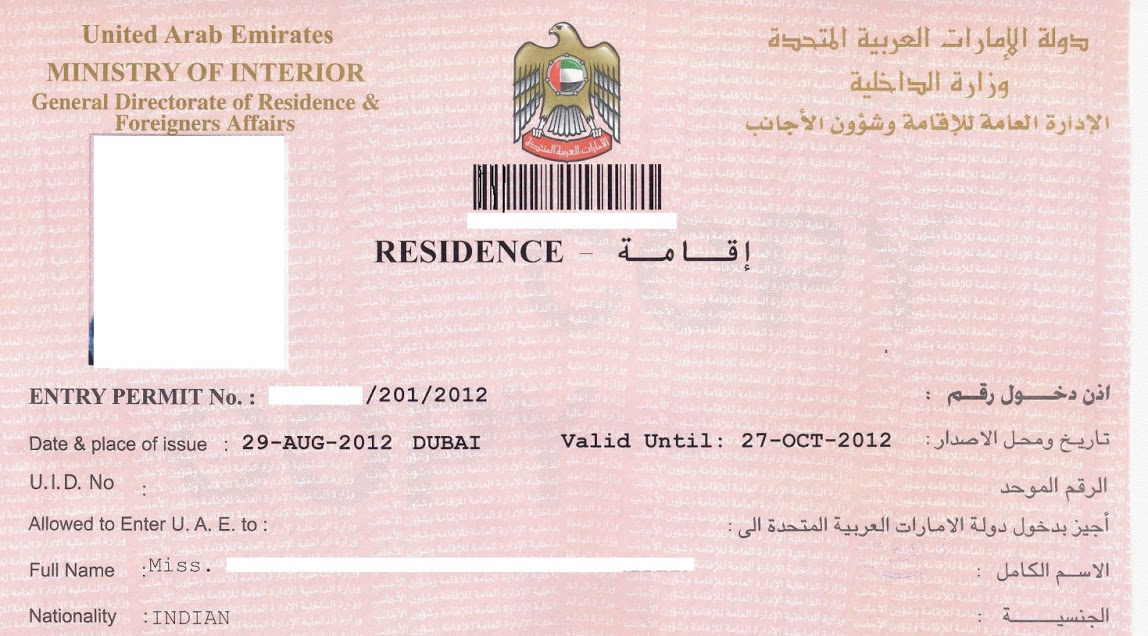
- Receive Entry Permit: Once approved, the entry permit is issued electronically. It is typically valid for 60 days from the date of issuance.
- Spouse Enters UAE: Your spouse must enter the UAE using this entry permit within its validity period.
Phase 2: Status Change (for Spouse Already Inside UAE)
If your spouse is already in the UAE on a visit or tourist visa, you can apply for an in-country status change rather than an entry permit. This process allows the spouse to convert their existing visit visa to a residence visa without leaving the country. The status change application is submitted through GDRFA or ICP, with a fee typically ranging from AED 500 to AED 800.
Phase 3: Medical Fitness Test
The sponsored spouse, if aged 18 or older, must undergo a mandatory medical fitness test at an approved health centre. The test includes a blood test (for infectious diseases) and a chest X-ray (for tuberculosis). The cost ranges from AED 370 to AED 700. The medical certificate is valid for one month and must be submitted before the residency permit can be issued.
Phase 4: Emirates ID Application and Biometrics
After the medical test is cleared, the sponsored spouse must apply for an Emirates ID. This requires:
- Submitting the Emirates ID application through the ICP website or app
- Attending a biometric enrolment appointment (for applicants aged 15 and above)
- Paying the Emirates ID issuance fee (AED 1,153 for a 10-year ID, pro-rated for shorter durations)
Phase 5: Residence Visa Stamping (Digital)
The final stage is the issuance of the residence permit. Since 2022, physical visa stickers have been phased out. Residency is now confirmed digitally, and all details are stored on the Emirates ID. The process involves:
- Submitting the completed application with all documents, medical certificate, and Emirates ID application
- Paying the residence permit issuance fee (approximately AED 2,856 for a 10-year permit, pro-rated)
- Receiving digital confirmation of residency within 1 to 5 working days after approval
Processing Timeline Summary
| Stage | Estimated Time |
|---|---|
| Document Preparation and Attestation | 2 to 6 weeks (varies by country) |
| Entry Permit Application | 1 to 5 working days |
| Spouse Entry or Status Change | Same day (for status change) |
| Medical Fitness Test | 1 to 2 working days (results typically within 24-48 hours) |
| Emirates ID and Biometrics | 1 to 2 days for enrolment; card delivery 7 to 14 days |
| Residence Visa Stamping (Digital) | 1 to 5 working days after medical and biometrics |
| Total Processing Time | Approximately 2 to 4 weeks (excluding document attestation) |
Total Cost Breakdown for UAE Spouse Visa 2026
The total cost of a spouse visa varies depending on the emirate, visa duration, and whether you use a typing centre or service agent. Below is a comprehensive cost breakdown.
| Component | Approximate Cost (AED) | Notes |
|---|---|---|
| Entry Permit (or Status Change) | 300 to 800 | Depends on emirate and if spouse is inside or outside UAE |
| Medical Fitness Test | 370 to 700 | Required for spouse aged 18 and above |
| Emirates ID Issuance | 1,153 | For 10-year ID (pro-rated for shorter durations) |
| Residence Permit Stamp (Digital) | 2,856 | For 10-year permit (pro-rated for shorter durations) |
| Typing Centre / Amer Service Fees | 300 to 600 | Optional but recommended for error-free submission |
| Health Insurance (Annual) | 800 to 5,000 | Mandatory; varies by age, coverage level, and insurer |
| Document Attestation and Translation | 500 to 2,000 | Varies by country and number of documents |
| Total Estimated Cost | 5,200 to 10,800 | Excludes annual health insurance renewal beyond first year |
Payment Methods and Channels
Fees can be paid through ICP and GDRFA online portals using credit/debit cards, or in person at authorised typing centres and Amer centres using cash or card.
Health Insurance Requirements for Spouse Visa
Health insurance is mandatory for all UAE residents, including sponsored spouses. The sponsoring spouse is legally responsible for ensuring coverage. Without valid insurance, the residence visa cannot be issued or renewed.
Employer-Sponsored vs. Individual Coverage
- Employer-Sponsored Insurance: Some employers offer the option to include dependents (spouse, children) in their corporate health plan. This is often the most cost-effective method. Check with your employer’s HR department to see if dependent coverage is available. Not all employers offer this option, especially small businesses or those with part-time staff.
- Individual Health Insurance: If your employer cannot include your spouse, you must purchase a separate individual health insurance plan for them. Plans range from basic Essential Benefits Plans (EBP) at approximately AED 800 to 1,500 annually, to comprehensive private plans costing AED 3,000 to 8,000 or more annually.
Minimum Coverage Requirements
| Emirate / Category | Regulatory Body | Requirements |
|---|---|---|
| Dubai | Dubai Health Authority (DHA) | All health insurance plans must meet DHA standards |
| Abu Dhabi | Health Authority of Abu Dhabi (HAAD) | HAAD sets the requirements for all plans |
| Essential Benefits Plan (EBP) | DHA (Dubai) | For those earning less than AED 4,000 per month Covers: emergency medical treatment, hospitalisation, surgery, outpatient services, and maternity Annual coverage limit: AED 150,000 |
| Tourist Visa Holders (Families) | UAE Federal | Minimum coverage required: USD $30,000 (approximately AED 110,175) |
Consequences of No Health Insurance
Families who fail to maintain mandatory health insurance face a monthly fine of AED 500 (as of 2026). They also risk visa complications, including denial of visa issuance or renewal, and may be held personally responsible for any unexpected medical bills, which in the UAE can be substantial.
Special Cases: Female Sponsors, Golden Visa, and Freelancers
Certain sponsor categories have different rules and requirements.
Female Spouse Sponsoring Husband
A female expatriate resident can sponsor her husband, but the process is generally more stringent. Authorities may require:
- A higher minimum salary, typically between AED 8,000 and AED 10,000 per month
- Additional approval from GDRFA depending on the wife’s profession and income level
- When a mother sponsors her children, GDRFA may also require a notarised and attested no-objection certificate (NOC) from the father
Golden Visa Holders: No Minimum Salary Requirement
Holders of the UAE Golden Visa (5 or 10-year residency) have the most flexible family sponsorship rules. They can sponsor their spouse, children of all ages (sons regardless of age), and parents without any minimum salary requirement. The maximum age limit of 25 years for sons is also removed for Golden Visa holders, provided the sons are unmarried.
Green Visa Holders
UAE Green Visa holders (freelancers, skilled workers, and investors under the 5-year self-sponsored visa) can also sponsor family members without a minimum salary requirement, subject to other conditions such as proof of suitable accommodation.
Free Zone Employees
Employees working in free zones can sponsor their spouse through their free zone employer or through GDRFA, depending on the specific free zone’s procedures. A No Objection Certificate (NOC) from the free zone authority may be required.
UAE Citizens Sponsoring Foreign Spouse
A UAE citizen’s foreign spouse, parent, or child can obtain a 5-year residence visa without having to work in the UAE. The UAE citizen acts as the sponsor. A foreign widow or divorced woman who is the mother of a UAE citizen can also obtain a residence visa, with the oldest child acting as the sponsor.
Visa Validity, Renewal, and Overstay Fines
Understanding the validity periods and renewal requirements helps avoid costly penalties.
Visa Validity Periods
The spouse residence visa is typically issued for a duration matching the sponsor’s visa, commonly 1, 2, or 3 years. The visa must be renewed before its expiry. Parents sponsored under the standard route receive 1-year visas, renewable annually subject to continued eligibility.
Renewal Process and Requirements
To renew a spouse visa, the following are required:
- Valid passport of the spouse with at least six months of validity
- Updated sponsor’s passport and residency visa copy
- Valid Emirates ID of the sponsor
- Updated salary certificate or employment contract
- Valid tenancy contract (Ejari or Tawtheeq) or proof of accommodation
- Medical fitness test for the spouse (if the previous certificate is expired or beyond the required period)
- Valid health insurance for the spouse
- Renewal application fee (approximately AED 1,500 to AED 2,500 depending on duration)
Grace Period and Overstay Fines
The family member has a 30-day grace period after the visa expires to renew it. After this period, overstay fines apply as follows:
- AED 25 per day for the first 180 days of overstay
- AED 50 per day for the next 180 days
- AED 100 per day after one year of overstaying
- If the sponsor’s visa is cancelled, dependents are granted a 6-month grace period from the date of expiry or cancellation to obtain a new residence permit or leave the country
If the sponsor fails to renew or cancel the visa of their dependents, they may be held personally liable for accumulated fines.
Can the Spouse Work on a Dependent Visa?
The sponsored spouse may be able to work under specific conditions:
- If they secure a full-time job, their new employer can request a work permit without changing the residency status to an employment visa, but the employer must still handle the work permit application
- To work for a private company, the employer may require the spouse to switch their visa to an employment visa sponsored by the company
- Freelance work is generally not permitted on a dependent visa without a separate freelance permit or license from the relevant free zone or authority (such as Dubai Media City, Dubai Internet City, etc.)
- Setting up a business or being a business partner is not permitted on a dependent visa; the spouse would need to obtain an investor or partner visa
- Volunteer work for registered charities and non-profit organisations is generally permitted without a work permit
- Starting a home-based business in a free zone such as Ajman Free Zone (where no physical office is required) may be possible, but a separate investor visa or freelance permit is typically required
- Driving for ride-hailing platforms like Uber or Careem is not permitted on a dependent visa; a dedicated licence is required from the relevant authority (such as the Dubai Taxi Corporation or RTA)
Converting a Tourist Visa to a Spouse Visa
If your spouse is already in the UAE on a tourist or visit visa, it is possible to convert that visa to a spouse residence visa without leaving the country, provided certain conditions are met. The process is called “Visa status change” or “in-country change of status”. Your spouse’s tourist visa must have at least 15 days of validity remaining at the time of application. You will need to apply through GDRFA or a registered typing centre (such as Amer centres in Dubai) rather than applying for an entry permit.
The application fee for a status change is approximately AED 500 to AED 800, depending on the emirate. Once the status change is approved, the spouse will receive a digital residency permit without having to exit and re-enter the UAE.
Nationality-Specific Requirements
Certain nationalities may face additional documentation requirements:
- Indian nationals: The marriage certificate must be attested by the Ministry of External Affairs (MEA) in India, then by the UAE Embassy in India, and finally by UAE MOFA. A national ID (Aadhaar or PAN card) may also be required for biometric verification.
- Philippine nationals: The marriage certificate must be attested by the Philippine Statistics Authority (PSA), then by the Department of Foreign Affairs (DFA), then by the UAE Embassy in the Philippines, and finally by UAE MOFA.
- Pakistani nationals: The marriage certificate must be attested by the Ministry of Foreign Affairs of Pakistan, then by the UAE Embassy in Pakistan, and finally by UAE MOFA. A copy of the Nikahnama (Islamic marriage contract) may also be required.
- Egyptian, Jordanian, and other Arab nationals: Additional documentation such as family books, national ID cards, or certificates of good conduct may be requested depending on the specific circumstances and the emirate processing the application.
Frequently Asked Questions (FAQ)
Can I sponsor my spouse if I earn exactly AED 4,000?
Yes, the minimum salary for spouse sponsorship is AED 4,000 per month, or AED 3,000 if your employer provides accommodation. However, GDRFA also considers your overall financial situation, including housing costs and any existing dependents. A salary of exactly AED 4,000 may be approved if you can demonstrate adequate housing and financial stability. A salary below AED 4,000 without employer-provided accommodation generally results in rejection.
How long does the spouse visa process take?
The entire process, from document preparation to final residence permit issuance, typically takes 2 to 4 weeks. However, marriage certificate attestation can add several weeks, depending on your home country. The medical test results are usually available within 24 to 48 hours, and the Emirates ID and residence permit stamping take approximately 3 to 5 working days after medical clearance.
What happens if my spouse’s visa is cancelled?
If the sponsor’s visa is cancelled, the spouse’s dependent visa is also cancelled. Dependents are granted a 6-month grace period from the date of expiry or cancellation to obtain a new residence permit (e.g., through a new sponsor) or to leave the country. During this grace period, they are not considered overstayers and no fines apply.
Can I sponsor my spouse if I am on a visit visa?
No. To sponsor a spouse, you must hold a valid UAE residence visa (employment, investor, or long-term residency). A visit or tourist visa does not confer sponsorship rights.
Does my spouse need to be present for the medical test?
Yes, the sponsored spouse must personally attend a DHA-approved (or equivalent) medical centre for the fitness test. The test includes a blood draw and a chest X-ray.
What is the difference between GDRFA and ICP?
GDRFA (General Directorate of Residency and Foreigners Affairs) handles immigration and residency services for the emirate of Dubai specifically. ICP (Federal Authority for Identity, Citizenship, Customs and Port Security) is the federal authority that oversees immigration and identity services for the other emirates (Abu Dhabi, Sharjah, Ajman, Umm Al Quwain, Ras Al Khaimah, Fujairah). For Dubai residents, applications are processed through GDRFA Dubai, often via Amer centres. For residents of other emirates, applications are processed through the ICP website or smart app.
Essential Checklist for a Successful Application
Use this checklist before submitting your spouse visa application to avoid common pitfalls.
- Sponsor holds valid UAE residence visa with at least 6 months of validity remaining
- Sponsor’s Emirates ID is valid and not expired
- Sponsor meets minimum salary requirement: AED 4,000/month or AED 3,000 + employer-provided accommodation
- Salary certificate issued by employer in Arabic, confirming monthly income
- Registered tenancy contract (Ejari in Dubai, Tawtheeq in Abu Dhabi) in sponsor’s name
- Marriage certificate fully attested through home country → UAE embassy → UAE MOFA chain
- Marriage certificate translated into Arabic by a certified legal translator (if not already in Arabic)
- Spouse’s passport valid for at least 6 months from application date
- Spouse’s passport-size photos meeting ICP specifications (white background)
- Mandatory health insurance policy for spouse purchased and active
- Completed visa application form (online or at typing centre)
- All copies of documents are clear, legible, and in the required format (PDF or JPEG)
- Sufficient funds available to pay all government fees (AED 5,000 to 10,000 total estimated)